What to pack
What to Pack for a European City Break: A Season-by-Season Guide
European weather can shift a lot between a spring afternoon and a spring evening, and even more between cities — Seville in July is a very different trip from Edinburgh in July. Rather than one generic list, here's what to actually adjust by season, the gear that earns its space in every bag regardless of month, and the things most people bring but never use.
Spring (April–May)
Spring is generally the most changeable season across Italy, France, Spain, Germany and the UK — mild, sunny afternoons can still turn into a cool, rainy evening, especially in northern cities. Early April tends to run noticeably cooler than late May, so it's worth checking exactly where your dates fall rather than packing for "spring" as a single block.
The trap most people fall into is packing only for the daytime high. A 20°C afternoon in Paris or Munich can drop into single digits after sunset, and outdoor dinner terraces stay open well past the point where a bare-arm outfit stops being comfortable.
- A packable rain jacket or umbrella — spring showers are common almost everywhere on this list
- Layers: a t-shirt, a light sweater, and a jacket cover most days
- Comfortable, broken-in walking shoes — historic centres mean a lot of cobblestones
- A light scarf or buff — useful for a cool morning and easy to stuff in a daypack once the sun's out
- Sunglasses — spring light is often brighter than the temperature suggests, especially at midday
Summer (June–August)
Southern cities — Rome, Seville, Palermo, Valencia — can get genuinely hot in midsummer, while UK and northern German cities stay milder. Check the specific city's forecast before you pack; the range across this list in July is wide, and a packing list built for Edinburgh will leave you overheating in Seville.
Humidity matters as much as temperature. Coastal and riverside cities (Venice, Hamburg) can feel stickier than the raw number suggests, which makes breathable natural fabrics — cotton, linen — noticeably more comfortable than synthetics over a full day of walking.
- Breathable, light-coloured clothing for southern Europe
- A hat and sunscreen — especially for cities like Seville and Palermo, where midday sightseeing can be intense
- A light layer for air-conditioned museums and trains, and for evenings that cool off even after a hot day
- A reusable water bottle — many European city centres have public drinking fountains
- A compact travel fan or cooling towel, especially useful during southern Europe's hottest stretches in July and August
- Sandals or breathable trainers with good arch support, as a break from closed shoes on the hottest days
Autumn (September–October)
Many of the cities on this site — see the seasonal roundup below — list autumn as their best time to visit: warm enough for sightseeing, without peak summer crowds or heat. September often still runs warm in the south, while October brings a noticeably cooler, crisper feel further north.
This is also the season where a single umbrella in the bottom of a bag earns its keep more than any other month — showers tend to be short but more frequent than in high summer.
- A versatile jacket that layers over a t-shirt or under a sweater
- Waterproof shoes or a shoe spray, particularly for Venice, Hamburg or the UK cities
- One warmer layer for evenings, which cool down faster than the daytime temperature suggests
- A packable daypack that compresses down — useful once the summer beach gear stays home
- An extra pair of socks: cooler mornings mean more layering, and wet pavements or grass catch people out
Winter (November–March)
Winter varies the most by latitude and coast: coastal Mediterranean cities like Nice or Palermo stay relatively mild, while Berlin, Munich and Edinburgh get genuinely cold, and Venice can see acqua alta flooding. Don't assume "Italy" or "Spain" means mild — a winter trip to Turin or Madrid still needs a proper coat.
Indoor heating in much of Europe runs warmer than many travellers expect, so the biggest comfort win is a layering system you can shed indoors rather than one enormous coat you're stuck wearing everywhere.
- A proper insulated coat for northern and inland cities (Munich, Berlin, Turin)
- Waterproof, warm footwear — and check Venice's tide forecast if visiting between November and March
- Gloves and a scarf for Germany and the UK; a lighter jacket is usually enough on the southern coasts
- Thermal base layers — more practical than one very heavy coat when you're moving between warm interiors and cold streets all day
- A small travel umbrella as backup even where snow is more likely than rain, since winter often brings both in the same week
Footwear: the one category worth getting right
A typical sightseeing day in a European city centre easily adds up to 15,000–20,000 steps, much of it on cobblestones, marble or uneven paving that's harder on feet than a flat pavement. Footwear mistakes are the single most common thing that derails an otherwise well-packed trip.
- Break in any new walking shoes for at least a couple of weeks before you travel — cobblestones will find every blister a stiff, unworn sole can cause
- One supportive daily pair plus one lighter pair for evenings covers most trips without adding much weight
- Water-resistant soles pay off in any season — Venice, Hamburg and the UK cities all see rain across the year, not just in the shoulder seasons
- Avoid packing shoes you've never actually walked in for more than an hour — a shop test is not the same as a full day on stone streets
Packing light: a carry-on-only strategy
For any trip that moves between two or more cities — Rome then Florence, or a few German cities by train — carry-on-only removes checked-bag waits, makes station transfers far less stressful, and forces a wardrobe that actually works together.
- Build a capsule wardrobe around two or three coordinating colours so every top pairs with every bottom
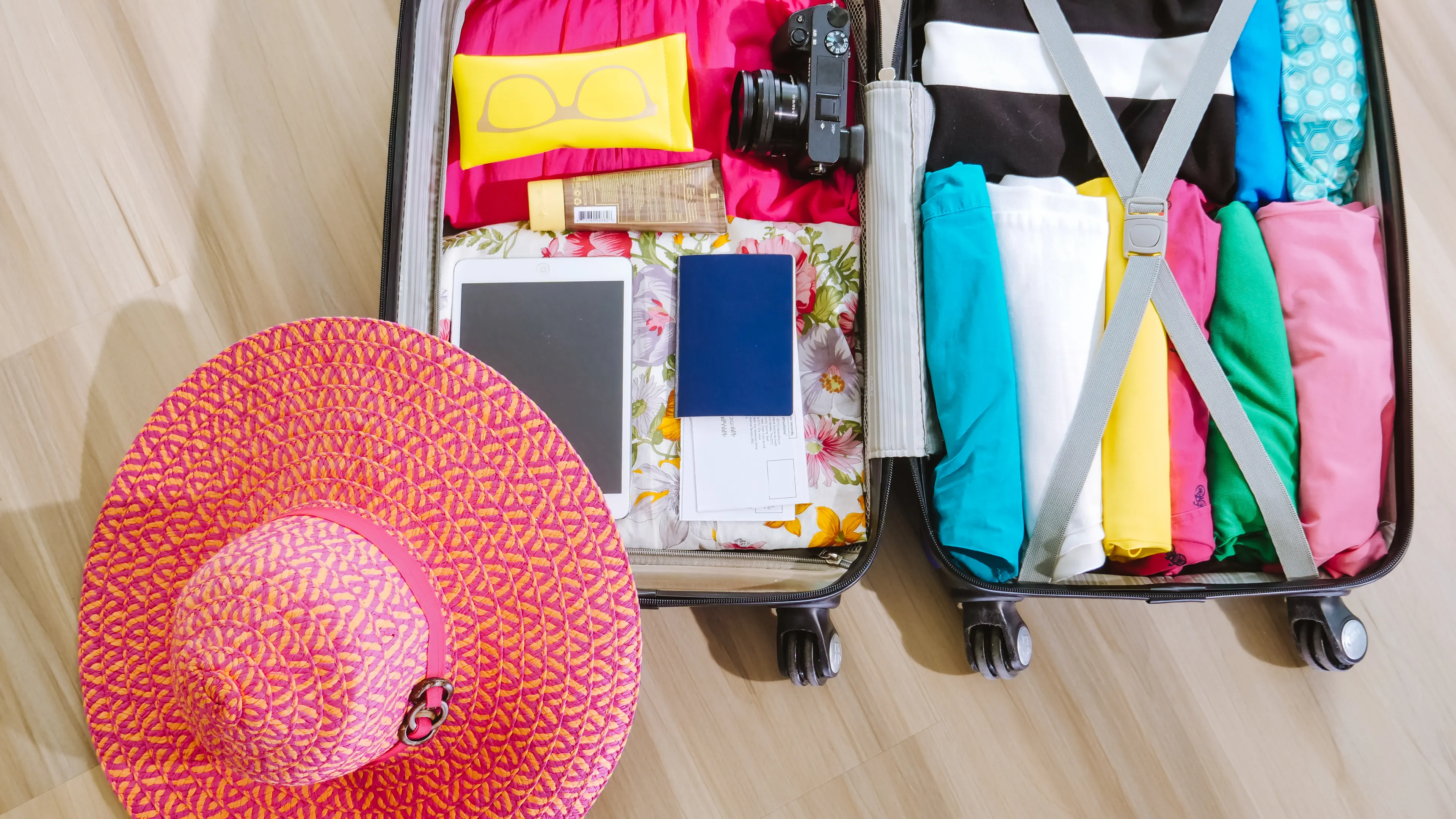
- Roll clothing rather than folding it, and use packing cubes to compress bulkier items like jumpers
- Plan on doing a load of laundry partway through any trip longer than a week rather than packing for every single day
- Keep liquids in containers under the standard cabin limit (100ml/3.4oz) and buy toiletries locally instead of over-packing full-size bottles
What people almost always over-pack
Most over-packing isn't about volume — it's specific categories that sound useful while planning and then sit unused in the case for the whole trip.
- A hairdryer or styling tool — most hotels provide one, and Europe's 220–240V sockets need a dedicated travel adaptor anyway for anything you do bring
- A different outfit for every single day — most travellers re-wear basics more than they expect to once they're actually walking around all day
- A large first-aid kit — a small one with the essentials (plasters, pain relief, any personal medication) covers almost everything that comes up
- Paper guidebooks or printed maps for every city — a phone with offline maps downloaded covers this with far less weight
A few things that help wherever you go
- A universal or European (Type C/F) plug adapter — most of mainland Europe runs on 220–240V
- A cross-body bag you can keep in front of you on crowded metros and markets
- A portable charger, especially useful on long sightseeing days away from an outlet
- A small day bag that can also work as your only carry-on for any short flight within Europe
- Check the live forecast for your exact dates before you finish packing — conditions can differ city to city even within the same country
City-specific notes worth knowing before you pack
A few cities on this site reward planning your packing around a specific local factor rather than the season alone.
- Venice: waterproof shoes matter here more than almost anywhere else on this list — see the acqua alta note in the winter section above
- Seville and Palermo: light colours and a proper sun hat make a bigger difference than you'd expect once temperatures climb into the mid-30s°C in summer
- Munich and Berlin: a proper insulated coat, not just extra layers, earns its suitcase space from November through February
- Nice and the French Riviera: pack swimwear even outside peak summer — the Mediterranean stays inviting well into September
Found this useful? Save it for your trip or share it with a travel buddy.